
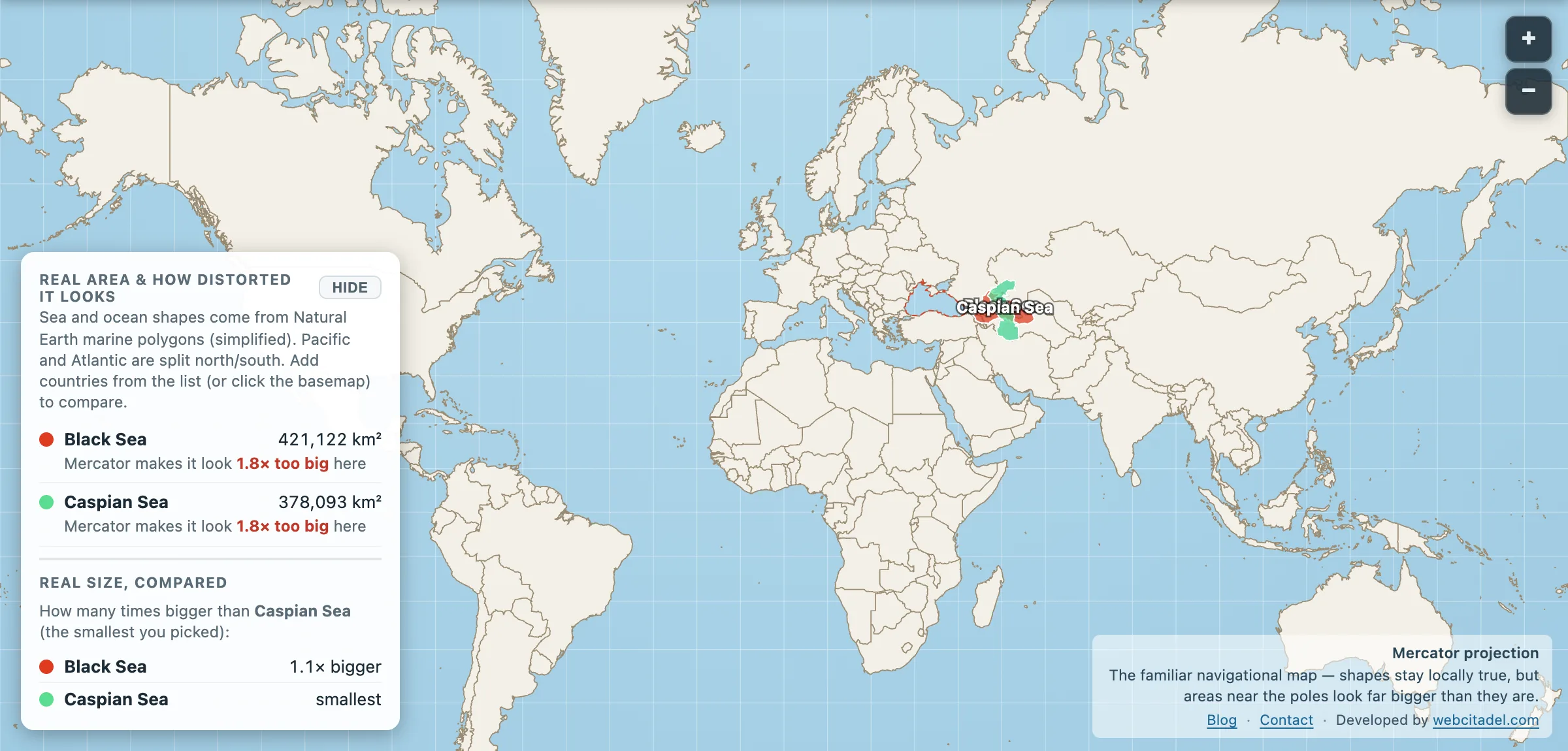
Two seas, side by side on the map, one small detail separating them. The Black Sea is a real sea, plumbed into the world ocean through the Bosphorus. The Caspian is the largest lake on Earth wearing a sea’s name, a landlocked pool with no exit, sitting 28 metres below sea level.
Some lake, though.
Black Sea: 421,122 km². Caspian Sea: 378,093 km².
The real sea wins, but barely. The Caspian is bigger than Germany. Five countries share its shoreline, it holds the beluga sturgeon that produces the world’s most expensive caviar, and it contains more water than all the Great Lakes of North America combined. When your “lake” needs an entire navy, several in fact, the label starts to feel like a technicality.
The Black Sea’s locked vault
The Black Sea’s party trick is stranger. Below about 150 metres it has no oxygen at all, the largest lifeless deep of any water body on Earth. Only a salty trickle gets in through the narrow Bosphorus, the layers never mix, and everything below the line just sits there, chemically asleep.
Which makes it the best shipwreck museum in existence. Wood that would rot in decades anywhere else survives for millennia. In 2018 explorers found a Greek trading vessel two kilometres down, intact, mast still standing, after 2,400 years on the bottom. It’s the oldest intact shipwreck ever discovered, and it looks like it sank the week before last.
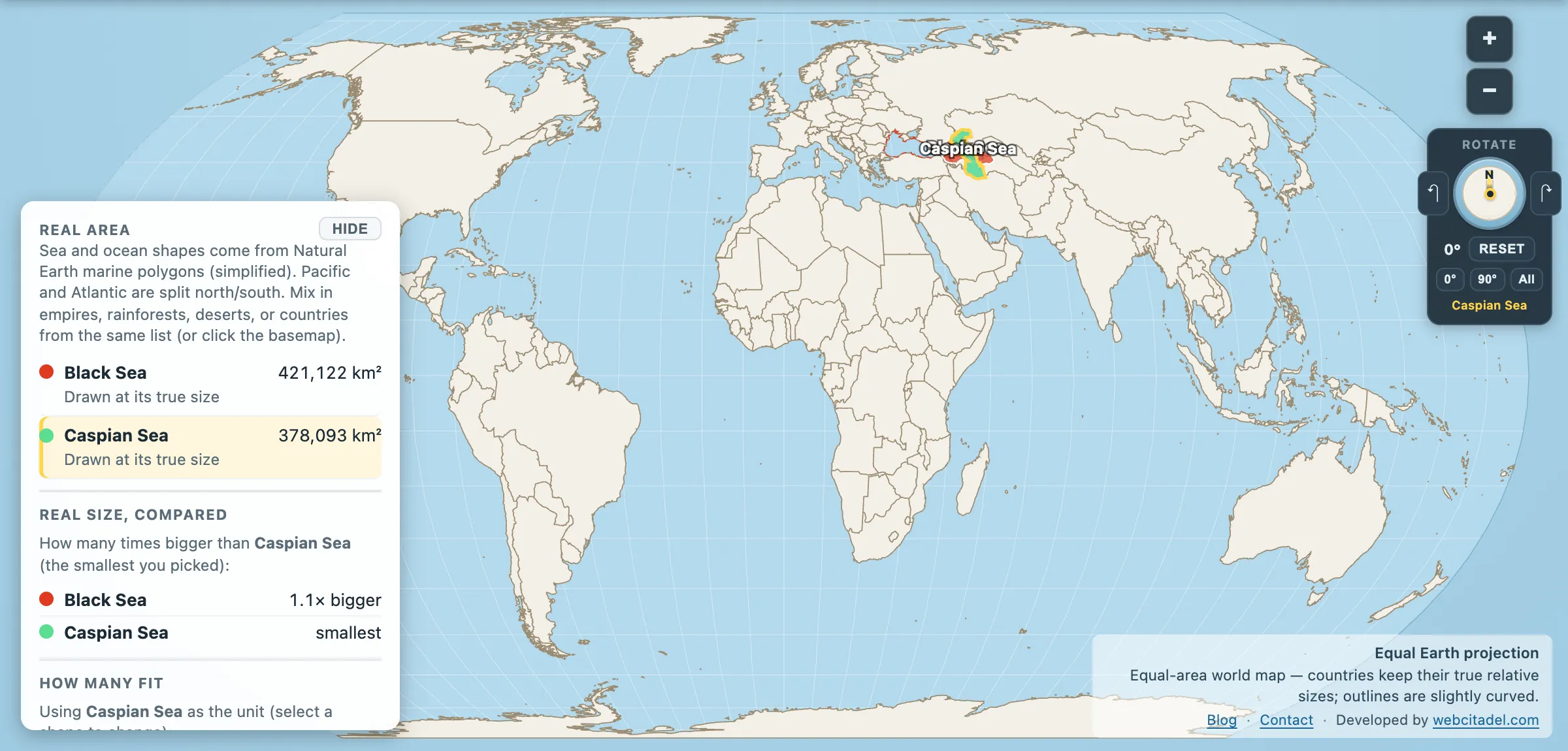
The same shapes on Equal Earth, where every square kilometre is drawn the same size wherever it sits. This is the honest version.
Weigh them yourself
Open Black Sea vs Caspian. The Black Sea has been dragged east and laid over its landlocked neighbour, and the fit is nearly perfect, a genuine photo finish between a sea and a lake.
Then drag in a country for scale and enjoy the smallest entries in the app’s ocean catalogue still humbling nations. And when you’re ready for the other end of the scale, the largest sea on Earth is thirteen of these. The blue parts of the map run a very wide league.